Friday, March 15, 2019

Kinesio Tape.

Kinesio Tape, also called Kinesio Tex Tape, is the original elastic adhesive tape developed by Dr. Kenzo Kase in 1979. It is latex-free, hypoallergenic and wearable for days at a time. Additionally, it can be used in athletes, pediatric patients, among other necessary cases.

    This tape alleviates discomfort and facilitates lymphatic drainage by microscopically lifting the skin. Kinesio Tape has the ability to re-educate the neuromuscular system, reduce inflammation, prevent injury and promote good circulation, and assist in returning the body to homeostasis. With the utilization of single “I” strips or modifications in the shape of an “X”, “Y” or other specialized shapes as well as the direction and amount of stretch placed on the tape at time of application, however; we need to remember that the findings of the clinical evaluation or assessment dictate the specifics of the Kinesio Tape application and other possible treatments or modalities.


    One of the many benefits of kinesiology tape is to provide structural support for weak or injured muscles or joints. While it is not recommended for severe injuries because of its elasticity, it can be used effectively to prevent potentially harmful ranges of motion and to improve static or dynamic postures; for this reason is common see it on athletes who are in competition.

    The key in the treatment of any clinical condition are the evaluation and assessment, this assessment should include manual muscle testing, range of motion testing, gait assessment, and any other orthopedic special tests that you deem necessary. It can be used in conjunction with a multitude of other treatments and modalities within your clinic and is effective during the rehabilitative and chronic phases on an injury as well as being used for preventative measures.

The specialist can applied the Kinesio Tape with 3 steps::
  •     Step 1: Preload the muscles by placing the affected area into a position of maximal stretch. Take your time; once, the maximal stretch has been achieved, this position should be held throughout the taping.
  •     Step 2: Apply one or more “decompression” strips directly over the most painful areas.
  • Step 3: Apply “stabilization” strips around the perimeter of the affected area. This is a good place to use Y-strips.


Curiosities-on:

Wednesday, March 13, 2019

Physiotherapy: basic concepts.

The Physiotherapy has many concepts that sometimes, when we go to the specialist, we do not understand. On this space, we are going to learn a little of some words that physiotherapists use daily with a patient:
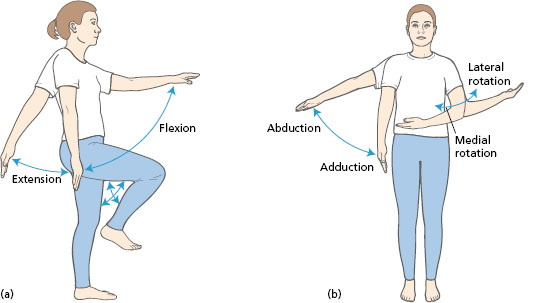
-Abduction - A movement of a limb away from midline or the center of the body.

-Adduction - A movement of a limb toward midline or the center of the body.
-Activities of Daily Living (ADLs) - refer to daily self-care activities like bathing, dressing, toileting, feeding and meal preparation.
- Ataxia - Muscular incoordination especially manifested when voluntary muscular movements are attempted.
- Bilateral - Pertaining to two sides of the body, as in: both arms or both legs.
-Cartilage- It is connective tissue that covers the ends of bones and acts as a cushion to absorb shock and a smooth surface to decrease friction between two or more bones in a moving joint.
- Contracture - occurs when a joint loses motion due to structural changes in the muscle, ligaments or tendons. Contractures are common in stroke as a result of lack of movement.
- Core - Pertaining to the trunk (primarily abdominals and back).
- Deformity - A major difference in the shape of a body part compared to what is normal for that body part. Deformity is most often seen in arthritis and sometimes in severe burn cases.
- Dissociation - To separate. For example: one extremity/limb performs a movement without the other extremity doing the same or similar movement at the same time.
- Distal - Farthest from the center, from midline or from the trunk.
- Extension - A straightening or backward movement of the spine or limbs.
- External rotation - An outward turning of the limb away from the body.
- Fine motor - the action involving the small muscles of the hands, as in handwriting, sewing or knitting.
- Flexion - A bending or forward movement of the spine or limbs.
- Gross Motor - Refers to movement of large muscle groups.Gross motor involves the larger muscle groups of the body to perform bigger movements such as walking or kicking a ball.
- Hamstrings - A muscle group on the back of the thigh that can bend/flex the knee and straighten/extend the hip.
- Hyperextension - Excessive movement in the direction of extension.
- Hypermobility - Movement beyond normal range of motion.
- Hypertonic - Muscle tone higher than normal; resistance to passive movement; in extreme form = spasticity.
- Hypotonic - Less than normal tone; floppy.
- Internal rotation - An inward turning of the limb toward the body.
- Instability - Lack of firmness in weight-bearing. Difficulty maintaining weight bearing.
- Kyphosis - An increased convexity in the curvature of the thoracic spine (hunchback).
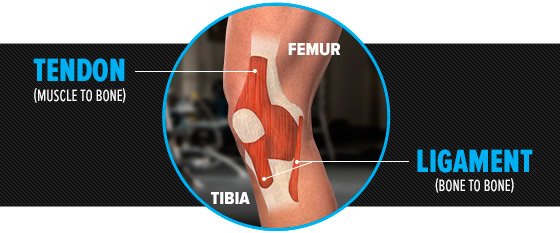
- Ligaments- they are the soft tissues that hold two or more bones together.

- Lordosis - An anterior/forward curvature of the lumbar and cervical vertebrae (spine). An increase is often referred to as “sway-back”.
- Lumbar - Pertaining to the low back.
- Motor Control - The ability of the Central Nervous System to regulate or direct the musculoskeletal system in a purposeful act.
- Motor Planning - The ability to organize and perform movement in a meaningful manner.
- Prone - Lying on the belly, face down.
- Proprioception - The awareness of posture, movement, changes in equilibrium, and the knowledge of position, weight, and resistance of objects in relation to the body. Sensed by muscles, tendons, and soft tissue.
- Proximal - Nearest to the point of attachment or center of the body.
- Quadriceps - A large muscle group on the anterior/front surface of the thigh responsible for knee extension.
- Range of Motion - A measure of the amount of movement/motion available at any given joint of the body.
- Reflex - An involuntary/automatic response to a stimulus.
- Sacral - The triangular-shaped bone below the lumbar spine formed, typically, by the fusion of 5 vertebrae.
- Spasticity - Hypertension of muscles causing stiff and awkward movements.
- Supine - Lying on the back, face up.
-Tactile Defensiveness - A negative response or increased sensitivity to touch.
- Tendon- It is the non-contractile unit that transmits the force of the muscle to the bone. Tendons connect muscles to bones.
- Thoracic - Pertaining to or affecting the chest or upper back.
- Tone (muscle) - The degree of tension normally present in the resting state of a muscle.
Curiosities-on:

Sunday, February 24, 2019

Frist aid

The first aid is the primary action to save a person who are at risk of life, but it is a difficult decision because we do not have information about the person, we do not know who is he, what kind of diseases suffered and the most important are we ready and with the necessary knowledge to apply the first aid?

To do a good job, we need to know some basic steps:
  1. Your life is the most important, sometimes people we know first aids forget to look carefully the enviorment and the patient; with this, He/she is in risk and can became in a patient, too. You need to be sure that the patient and all the people or elements that are in the area are safe or in good conditions.
  2. If the area is sure, you can start with the patient. First he/she is counscious or unconscious. Look for a response of the patient, you can ask name, age, where is he/she, what day is or the date (be careful if the patients knows the place and the time, it is important to the paramedics).
  3. If the person is not counscious, call the emergency number of your country !

The first aids have different techniques to save a person's life. One of this technics is:

  • CPR or cardio-pulmonary resusitation: it is one of the most importante because they can prevent the death of the patient for a heart attack. To provied CPR to a patient we need to follow some steps:

  1. Airway: Open carefully the mouth and check that the airway is clean, or in other words, the airway does not has any material or unusual object inside. Open the airway by tilting head with chin lift.
  2. Breathing: Be careful if the patient is breathing or not (if he/she if breathing, you need to pay attention on how he is doing it. It is fast, slow, difficult or is normal)
  3. CPR: if he/she is not breathing and does not have pulse star with CPR (30 chest compressions x 2 breaths).
  4. Desfibrillation: use a AED if the patient does not respond.

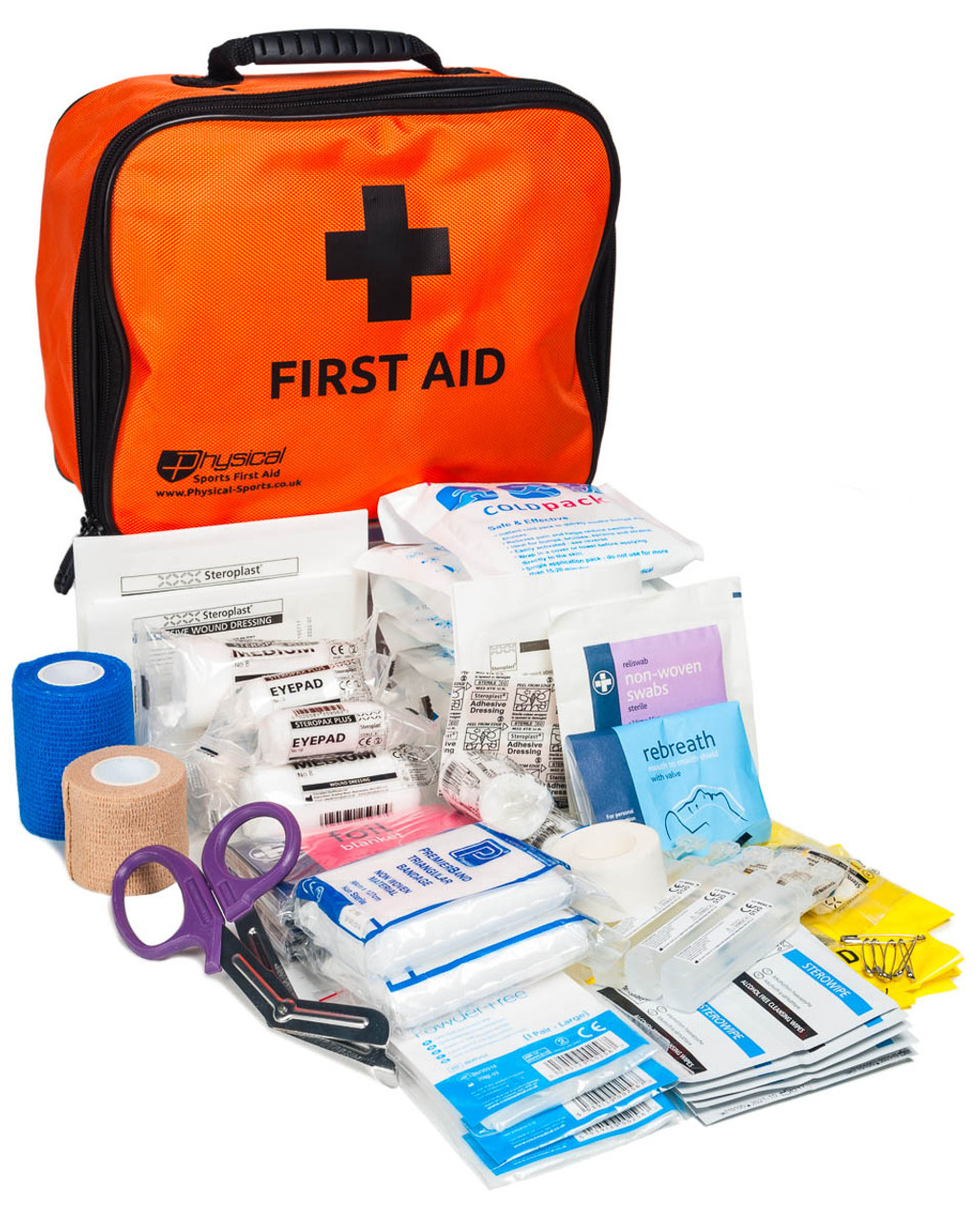
You can have also a firts aid kit, that commonly is compouned by:
  • Gloves (sterile)
  • Bandages, roller bandages and tape
  • (Sterile) Gauze
  • Antiseptic wipes and swabs
  • Absorbent compresses
  • Antibiotic cream
  • Burn ointment
  • Mask for breathing (rescue breathing/CPR)
  • Chemical cold pack
  • Eye shield and eye wash
  • First aid reference guide that includes local phone numbers
Curiosities-on:

Tuesday, February 19, 2019

NPL II Origins and Technics


NLP Origins

Neuro Linguistic Programming began its life in the 70s with John Grinder (a professor from the University of California) and Richard Bandler; both men have a fascination with the human excellence, the behavioural patterns, amount others.  They started Modelling three people, Fritz Perls, Virginia Satir and Milton Erickson.

As we say before modelling is the core activity in NLP and it consists in the process of replicating the language and behavioural patterns of an individual who is excellent at some activities. The first three  people, already mentioned, was the 'models’ of Grinder and Bandler with their unconscious excellence. Through NLP Modelling both men made explicit the skills that the three geniuses have and with this the NLP was  born.


Grinder and Bandler presented two books in 1975, “Structure of Magic I and II.” The books put NLP on the world and,  with the interest that appears in the society, they started to offer some courses to share the information with others. NPL teaches the world that the most important communication is not between people but within people.


NLP Research and Recognition Project

The clinical psychologist Frank Bourke created a non-for-profit organization,called the NLP  Research and Recognition Project. The main idea was to expand the clinical investigation into Neuro-Linguistic Programming.

Dr. Bourke has been using NLP clinically since the early 70’s  and with the 9/11 attack , he designed and applied a rehabilitation to the survivors of the WTC building; as a result he founded the organization because he considered that science need  this implementation.


Popular NLP Techniques

Eye Accessing Cues: Grinder and Bandler discovered the different movements that eyes do when people are talking , thinking or listening. This movements indicate whether one is using pictures, words, sounds, or feelings when thinking, remembering or learning; they are called essing cues.


The body language is also a Technics or method in curiosities-on we have an example


Curiosities-on

Sunday, February 17, 2019

NPL and its Principles

What is NLP?
Neuro Linguistic Program is the practice of understanding how people organise their thinking, feeling, language and behaviour to produce the results they do. Commonly, NLP is used for personal development and for success in business; additionally the NPL has a key elements, that is the study of de internal mental maps of the world as a product of the way that people filter and perceive information through their senses.

Now, we are going to study a little about the words that compound the NLP:

The word 'Neuro' is referred to the mind or brain and also, about how states of mind and body affect communication and behavior; as we said before, people have mental maps that are constituted of internal images, sounds, tactile awareness, internal sensations, taste, smells, amount others (this is the “neuro” aspect). The word ‘Linguistic’ is referred to the personal meaning that assigned for the information received from the world outside; on other words, we select a language to our internal map, it can be verbal and nonverbal communication. At last, the word ‘Programming’ is referred to the behavioural response that occurs as a result of the neuro linguistic processes; also, it is referred to be ability to change our mind and body states.

To discover the world of NLP, the people have some others to do it, they are NPL Modelling, NLP Training and NLP Application.


  • NLP Modelling: It is the highest skill level in NPL, Modelling can be used to capture patterns of excellence present in anyone or in any context. Communly, it uses the activity of compared someone who is excellent with someone that is mediocre at the same thing. 
  • NLP Training: they are the beginners that start to share thief knowledge about NLP .
  • NLP Application: a practitioner can employ the necessary skills as an agent of change working with individuals, groups, companies or in others environments.

On other hand; we need to remember that all the theories, investigations or ideas are based on pillars of foundations in this case we have four of this:
  • Rapport: it is the connection that people have with others. Rapport can be built quickly through technics as eye accessing, preferences, traditions,etc.; It is and important gift from NLP to the people.
  • Sensory awareness: NLP invited you to notice that the world is much riches and different when you take the time to see it and to pay attention on it.
  • Outcome thinking: An outcome is your goal for doing something, this principle may help to make the best decisions and choices, it connects to thinking about what you want.
  • Behavioral flexibility: It means being able to do something differently if the way you are currently doing it; it is about being flexible to find fresh perspectives and to build these habits into your repertoire.

Curiosities-on: 


Sunday, January 20, 2019

Biomechanics


   Biomechanics is a science part of the larger field of kinesiology, it is focusing on the mechanics of movement; it is a multidisciplinary science that combines biological and medical knowledge with engineering. Biomechanics includes how muscles, bones, tendons, and ligaments work together to produce movement. Also, the mechanics of blood circulation, renal function, and other body functions; it studies not only the human body, it studies animals and even extends to plants and the mechanical workings of cells, too.

     This beautiful science includes some elements, as the followings:
  • Statics: Studying systems that are in equilibrium or forces associated with not-moving. 
  • Dynamics: Studying systems that are associated with moving. 
  1. Kinematics: Describing the effect of forces on a system, motion patterns including linear and angular changes in velocity over time. Position, displacement, velocity, and acceleration are studied.
  2. Kinetics: Studying what causes motion, the forces and moments at work.


     There are multiple specialty areas in biomechanics, such as cardiovascular biomechanics, cell biomechanics, human movement biomechanics (in particular orthopedic biomechanics), occupational biomechanics, and sport biomechanics. Specialties with biomechanics include:
  • Biological Science: Studies of human, animal, cell and plant biomechanics.
  • Exercise and Sports Science: Applying biomechanics to human performance in athletics. 
  • Health Sciences: Researching causes, treatment and prevention of injury and using biomechanics to design rehabilitation programs and equipment. 
  • Engineering and Applied Science


     Study this science is very difficult because is not a common career, a biomechanics' student take courses about physics, biology, anatomy,  psychology, mathematics and engineering. Also, the student with doctorates can work with different aspects: research and design by sports companies, athletic research and testing, workplace testing and design of interfaces between humans and equipment. The applications of biomechanics are wide-ranging and some examples include the use of biomechanical analysis in the design of implantable artificial prostheses, such as artificial hearts and small-diameter blood vessels; in the engineering of living tissues, such as heart valves and intervertebral discs; and in injury prevention related to vehicle accidents, etc.

     
In Venezuela the most common way to studied about biomechanics is with health sciences or sports. The following aspects are included in the study of biomechanics:
  • Biomechanics can be applied to individuals, analyzing their movements and coaching them for more effective movement during exercise, sports, work, daily activities, etc. 
  • Biomechanics can be used in the design of sports equipment, clothing, shoes, etc. 
  • Biomechanics can study sports techniques and training systems and develop ways to make them more efficient.  
  • Biomechanics can be applied to studying the causes, treatment, and prevention of injuries. The research analyzes the forces at work that can lead to an ankle sprain and how shoe design or the playing surface might reduce the risk of injury.

Curiosities-on 

Wednesday, January 16, 2019

Physiotherapy

 
 The physiotherapy is a science based in the knowledge of the human body. The professional in this area, called physiotherapist, is considered a mechanic for the body. He is a medical professional that uses natural physical approaches, techniques and methodologies in order to promote, maintain and restore the well-being of a person.

     A physiotherapy has knowledge about anatomy, neuroanatomy, physiology, medical conditions, musculoskeletal conditions, sports, biomechanics, exercises prescription and electrotherapy; with all this knowledge this professional can work with special activities as competitions of some sports,  or with the daily activities, too.

 
 In the case of “sports physiotherapy”, we can say that is the special branch of physiotherapy studies because sports injuries are very different to everyday injuries. An athlete require high level demand and performance of his body for that reason he has a lot of stresses in his muscles and also in joints and bones, so they need special attention.

     The most common reasons for visit a physiotherapist are  musculoskeletal pains or in other words muscle and joint conditions. The treatment for this conditions are advance clinical assessment and diagnosis methods that can:


  • Totally relieve or reduce your pain.
  • Improve your fitness.
  • Help you to recover quicker your normal activities.
  • To Improve your flexibility, coordination, proprioception, muscle strength and quality of movement.
  • Help you to prevent futures injuries. 
Some of the treatments or techniques that physiotherapist applies are:
  • Joint mobilization and manipulation.
  • Musical energy techniques.
  • Physiotherapy instrument mobilization.
  • Muscles stretching
  • Neurodynamics.
  • Massages. 


For more information you can visit: www.physioworks.com.au

Curiosities-on: